
Service Pages vs a One-Page Website: What Actually Gets Found
On this page
- A one-pager is a page about "us"
- People search for the thing, not for you
- What a service page holds that a paragraph cannot
- The same rule applies to chat bots
- What this looks like on a real site
- When one page is genuinely enough
- The trap in the middle
- How to split a one-pager without starting over
- See it on your own business
Short answer: a page for every service, in nearly every case.
A one-page website mentions everything you do, which means it is not really about any one of them. When someone searches for the exact thing you sell, the page that wins is usually the page about that exact thing.
Here is why, in plain words.
A one-pager is a page about "us"
Picture a barbershop one-pager. Hero photo, a list of services with prices, an about paragraph, a map, a contact form. Everything is on it.
Now picture the search: "hot towel shave near me".
Google is looking for a page that answers that question. Your one-pager has the words "hot towel shave" in a list, halfway down, next to nine other services. A competitor has a page whose title, heading, photos and first paragraph are all about hot towel shaves.
That competitor wins, and it is not close.
Nothing is wrong with your one-pager. It is a page about your business in general, and almost nobody searches for a business in general.
People search for the thing, not for you
Only two kinds of people search your business name: customers you already have, and someone holding your card. Everybody else types what they want.
- "gel x nails kendall"
- "car key replacement new orleans"
- "emergency drain cleaning saturday"
- "beard trim and hot towel shave"
Those are four different questions. One page can be a strong answer to one of them. It cannot be a strong answer to all four, because the moment you write it to cover all four, it stops being specific about any of them.
Every service you offer is a door people could walk in through. A one-pager gives you one door.
What a service page holds that a paragraph cannot
On a one-pager, a service gets a line and a price. On its own page, it gets room to do actual work:
- The real price, where people can find it without calling to ask.
- What is included and how long it takes. Half the phone calls you take are this question.
- The two or three things customers always want to know first. Does it hurt. Do I need an appointment. Do you come to me.
- Photos of that specific work, not a general shot of the room.
- A button to book that service, not a contact form that starts a conversation.
That is a page that sells. A line in a list is a page that informs.
The same rule applies to chat bots
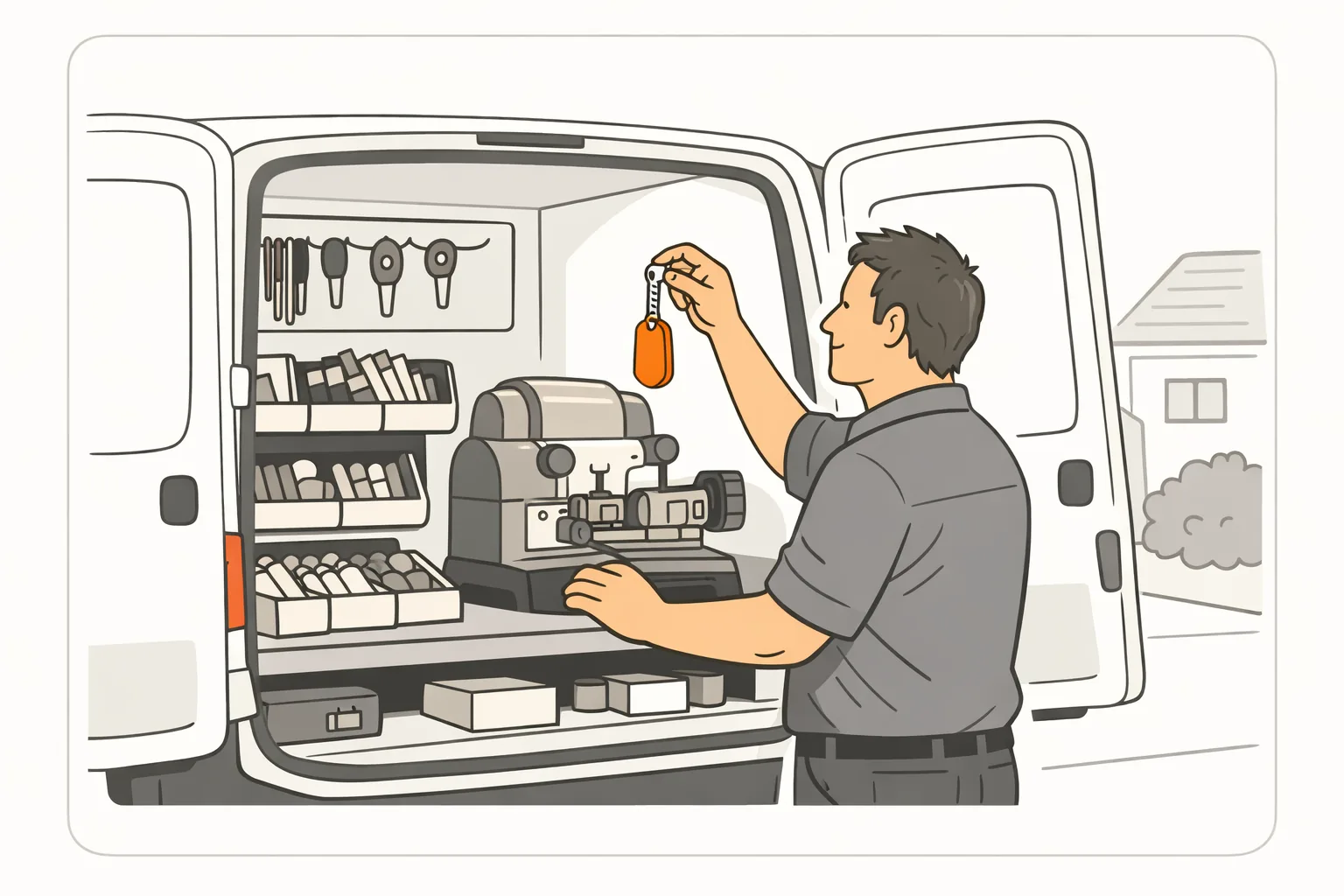
When somebody asks ChatGPT or Google's AI answers for a locksmith who can cut a car key, those systems answer from what they can read. A page that is entirely about car key replacement is easy to read, easy to summarize, and easy to quote. A clause buried in a page about ten services is none of those things.
No one can promise you a spot in those answers, and we do not. What you control is whether there is something clear and complete for them to read in the first place. We went through the details in how ChatGPT picks the local businesses it recommends, and the page structure side of it lives on Google Maps and AI answers.
What this looks like on a real site
Grove Batu Barbershop in Coconut Grove has a page for the hot towel shave, separate from the haircut, separate from the beard trim.

So a search for "hot towel shave Miami" has somewhere to land that is about a hot towel shave, and the person who lands there sees the price before they decide.
AP Nail Lab in Kendall runs the same structure at a different scale. Thirty-two services from their booking menu, each with its real price, each on a page a search can find. Gel-X is not a bullet on a homepage. It is a page.
Neither of those sites is huge. They are just organized the way people search.
When one page is genuinely enough
There are real cases. Be honest about whether you are one:
- You truly sell one thing. One service, one price, one kind of customer.
- You are brand new and still working out what you offer. Start with one page and split it when you know.
- The page exists for one ad campaign and traffic arrives from a single link. Nobody is finding it by searching.
Even then, that single page still needs the basics: your hours, your address, a phone number that taps to call, and your reviews as real text on the page rather than a screenshot.
The trap in the middle
The usual compromise is anchor links. Tabs, accordions, a menu that jumps to "#services".
Those are fine for a visitor who is already scrolling. They do nothing for being found. A jump link is the same page, with the same title, competing exactly once. You have made a long page easier to navigate, not a second page to be found by.
If a section is worth its own heading and its own price, it is worth its own page.
How to split a one-pager without starting over
You do not need a rebuild. You need a list.
- Write down every service you would name out loud on the phone. That list is your page list.
- Name each page the way a customer says it, not the way your industry says it. "Car key replacement", not "automotive transponder services".
- Give each page a price, what is included, how long it takes, and the two questions people always ask. Four short blocks is a complete page.
- Keep your one-pager as the homepage. It becomes the front door that links to every service page, which is exactly what a homepage is for.
- Match the service names to your Google listing. The same words in both places, so nobody has to guess whether it is the same business.
That is the whole method. It is not clever. It works because it lines your website up with the way people actually search, and most of your competitors have not done it.
If you are weighing what this costs to have done properly, we put real numbers next to each other in what a small business website actually costs, and the build itself is covered on website design and management.
Related reading: Website design and management and The pages every local business website needs.
See it on your own business
The fastest way to know whether this matters for you is to look at your own services laid out as pages.
Type your business name at 30secondsites.com and see the site built from your Google listing, with a page for every service you offer. Looking is free. No card, no login, no email until you want to keep it.
Questions
Asked about this, answered plainly
Will splitting my one-pager into service pages hurt my homepage?
No. The homepage keeps its job, which is to say who you are and get someone to call or book. The service pages take the specific searches the homepage was never going to win. They link to each other, so the site reads as one business, not five.
How many service pages should I have?
One for each service you would name out loud on the phone. Two is fine if you do two things. Thirty is fine if you do thirty. The wrong answer is one page with all of them squeezed into a list.
Do anchor links or tabs on a one-pager count as separate pages?
No. A jump link to a section is still the same page with the same title and the same one shot at any search. It helps a visitor scroll. It does not give you a second page to be found by.
What if two of my services are almost the same?
Then write one page and name it the way customers say it. Two pages with the same words on them help nobody. Split only where the price, the time it takes, or the question a customer asks is genuinely different.
My services are already on my Google listing. Is that enough?
The listing shows the names. It has no room for the price, what is included, how long it takes, or the questions people call to ask. That is what the page is for, and the two should name the services identically.